Lil' Kim: clearly promiscuous, completely open and comfortable with her sexuality...should the American society she lives in praise or condemn her for her lewd behavior?
"How Many Licks" by Lil' Kim (featuring Sisqo)
Like many other female R&B, Hip-Hop, and Rap artists, Lil' Kim has no problem showing her body and embracing sexuality. Why is the female celebration of sensuality so strongly frowned upon in American society? Openly sexual male Hip Hop artists, like Snoop Dogg, rap about women who please them sexually, receive historically receive less criticism, while when female artists, who say the same thing, essentially, receive more criticism because the message was voiced from a female, like Lil' Kim. There are people that would simply affirm his lyrics and make statements along the lines of "Snoop is such a baller," and wouldn't comment on his blatant disrespect towards women, or question his behavior. On the other hand, it seems that when female Hip-Hop artists, like Lil' Kim cannot seem to escape ridicule. It seems that many of the same people who render themselves avid fans of artists like Snoop Dogg cannot bring themselves to appreciate similar messages from female artists. If there are Americans that can accept men who explicitly express their enjoyment of sex, why does the double sexual standard exist?


Versus
 Sigmund Freud's Madonna-Whore Dichotomy details the initiation of the sexual double standard. Men with this complex habitually classify women as being either virtuous or whorish. However, this mindset disallows true happiness because these men cannot be sexually satisfied by the pure, virginal women they profess to love, yet at the time they cannot come to love the type of whorish women that they are sexually attracted to. In American society, women's expression of sexuality is a Catch 22. Men eminently transmit frustration towards the Madonna because of her prudence, but continue to seek these women. Though when a woman, like Lil' Kim, behaves conversely and expresses her sexuality freely, she is often subject to public scorn. This sexual oppression indubitably manipulates a large number of women into believing that this type of binary identification is realistic. Women that struggle to overcome the standard are under the impression that they must either obliterate their Madonna status, causing men to lose respect, or they must remain a Madonna who is criticized and also miserable since they must restrain natural inclinations to sustain that status.
In the the initial factory setting of the Hip-Hop artist's "How Many Licks?" video, Lil' Kim establishes that society controls the idea of what it means to be a woman. The screen shot of the liquid mannequin mold, as the word "original" flashes across the screen, symbolizes many women's vulnerability to society's pressure to a become a Madonna. Without the shell, the liquid is not required to take any specific shape. Similarly, without the double standard, women would not feel that they are either a whore, or a Madonna, but a woman whose sexuality is only a function of her humanity. The second frame of the cooked mold, with the word "realistic," suggests that the influence of the shell, or societal pressure, prevents many women from taking on their own identity. However, these women are entrapped in the shell, believing they must take on the perfectly refined Madonna mold. The influence is so strong that women, like Geraldine of Morrison's The Bluest Eye, might as well be a one of the molds in Lil' Kim's video.

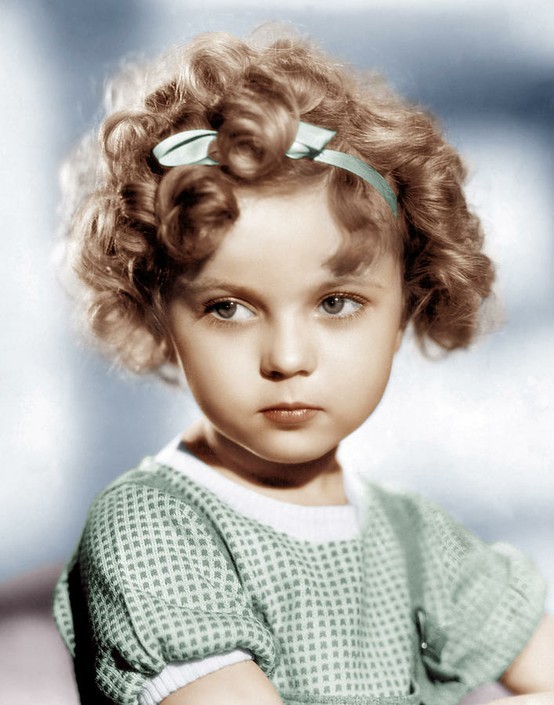
In the novel, the white iconic figures of the media cause these black women to reject their identity, preventing them from embracing their bodies and connecting intimately with others. Because these women cannot be the Shirley Temple valued by society, they consume their energy assimilating whiteness. The influence of societal perceptions is so extreme that when Geraldine-like women, have dreamed of being free of their identity insecurities, they "have looked long at the hollyhocks in the backyards"; they focus on the flowers typically native to Asia, in otherwise natural foliage (82). Instead of admiring the nature, Geraldine and the type of women she represents, solely stare at the beauty of the flower that should not be there; the identity they should not be rooted in.
Geraldines reject their black identity because they haven't learned to love the identity that fits them. Therefore they are ashamed of their body and do not know that they "got in goin' on" ("Big Momma Thang," Lil' Kim, ft. Jay-Z, Lil' Cease). In fact, their shame and inherent self-consciousness galvanizes an inability to connect emotionally and physically during sex because they do not consider themselves beautiful. When Geraldine and her husband have sexual intercourse, he must only lift "the hem of her nightgown to her navel" (84). Since the Geraldines do not have to reveal their bodies fully, they evade the humiliation of completely facing the "racial self-loathing" that is normally suppressed. Despite that they "wonder for the six hundredth time, what it would be like to have that feeling," the Geraldines are not proactive; they do not seek to engage themselves sexually with other people. Instead, their dream Their dream of unobtainable "beauty," induces them to compensate the lack of intimate, sensual connection. Attempting to fulfill the role of sexual interaction, Geraldine nonchalantly engages with her cat as a substitute. She often "will accept the strangely pleasant sensation that comes when he writhes beneath her hand and flattens his eyes with a surfeit of sensual delight" (85). She does not render the interactions strange because of the extent of her sexual frustration, nor because a cat substitutes masturbation; she describes the feeling as strange because she is not accustomed to sensual gratification.
Because there are a plenitude of American women today affected by societal perceptions and struggle with sexuality, female artists like Lil' Kim over sexualize themselves in order to teach women that sexuality is simply a function of humanity. In the "How Many Licks?" video the singer communicates that she aims to diminish the vapid notion of sexuality as the mannequin transforms into Lil' Kim. This screen shot conveys the artist's message that women possess the power to take control of their sexuality. They do not have to be the mold society pressures them to be. From this video, one can easily observe that Lil' Kim has found the strength within herself to negate the double standard, ultimately giving her the ability to embrace her body. She can freely express her sexuality and even comfortably discuss times at which she was the "only one that could handle him" with pride (53). The manner in which she boldly struts down the runway, explicitly describing some of her sexual experiences suggests that Lil' Kim does not allow others to define and inhibit her.
Rather, she transforms a concept many women accept: the components female power. From a young age parents teach their daughters that the female body is precious, the value of virginal preservation, and the male responsibility to serve women through heroism and chivalry. Lil' Kim's personal philosophy seems to be that if men are to serve women, she would like them to serve her sexually. Thus, she refuses to implore the parent taught components of female power by refusing to provide a womb and follow specified gender roles. She also embraces the power all women have over men, but asserts it uniquely. Lil' Kim creates a personal sexual standard that is appropriate for the type of life style she desires to engage in. Most importantly, because Lil' Kim remains in control of her social interactions and actually enjoys them, she does not allow others to punish her by labeling her a whore.
Disclaimer: In the below paragraphs, I am not advocating prostitution. Thousands of women are forced into prostitution as a necessary means for survival. There is also an extreme amount of women abducted and exploited in sex trade every day. I believe prostitution is an injustice no woman should ever experience. I am, however, arguing against the double sexual standard.
The Bluest Eye prostitutes are similar to Lil' Kim in the sense that they embrace themselves fully and do not let others define them. Even though their clientele may perceive them as a service, they possess the confidence the Geraldines lack. When Miss Marie playfully teases Miss China about her skinny legs, China retorts, "Don't worry 'bout my bandy legs. That's the first thing they push aside," and "all three of the women laughed" (52). The prostitutes are clearly not ashamed of their sexuality and because they embrace it, they do not feel the pressure to be a Madonna or assimilate whiteness. They do not practice self-prejudice, but embrace their black identity, keeping their hair curly, unlike the Geraldines who straighten their hair (53). More simply, they tell "haters, I paid y'all no mind" ("No Matter What They Say," Lil' Kim). The prostitutes are also the happiest characters in the novel. Not only do they frequently joke and laugh, but they do not complain about money or the work they do. Miss Marie tells Pecola that when she found out somebody would pay her for sex that "you could have knocked me over with a feather" (55). Thus, not only does Miss Marie take delight in her occupation, but she chose to be a prostitute, she is in control, like Lil' Kim.
Though they possess the liberty the Geraldines envy, Morrison indicates they only possess it because of their whorish identity. The author does not create any other openly sexual female characters in the novel; indicative of some Americans misconception that all openly sexual women are whores, or "sluts," while other women are prudish and restrain themselves, like Geraldine. In Black Star's song "Thieves in the Night," Talib Kweli and Most Def extrapolate on the "law of The Bluest Eye" (ll. 3). America claims to be a "land of opportunity," where diverse peoples and beliefs are welcome, yet many people suffer from various types of binary identification. Referring to American culture Most Def states,"We either niggaz or Kings/Bitches or Queens"; we are not complicated individuals, but unrealistic stereotypes, placed into categories based on theories and constructs like Biological Determinism, beauty, and the sexual double standard.
"Thieves in the Night"
Blackstar
Songwriters: TALIB KWELI GREENE, DANTE SMITH, CHARLES NJAPA