Showing posts with label American Dream. Show all posts

Friday, October 26, 2012

Welcome to The Jungle

Welcome to The Jungle

America: The Land of Opportunity  


     We all want to believe that our precious homeland of America is truly a place where dreams can become a reality if you work hard enough, but in reality, that just isn't the case. We are sold on hope every day by those who believe in the integrity of the American capitalist system, such as politicians, advertisements, and even our own teachers in school; but what's it really like out there? From the viewpoint of housewives, children, students, and anyone who is financially supported by someone other than themselves, the capitalist system seems to be working out pretty nicely. But for those who put capitalism to the test, such as the breadwinners, the interns, and the less fortunate among us, the American Dream isn't quite so easily attained; capitalism seems to be an intensely competitive system, to the point of downright hostility. Guns N' Roses' "Welcome to the Jungle" is the epitome of an introduction to the sphere of the rat race of the American capitalist system. As the title shows, the song appears to "welcome" you to the vicious "jungle," where dreams come to die in a cutthroat struggle to reach the top of the food chain. Through Guns N' Roses' hard rock atmosphere, and Axl Rose's distressed yet passionate voice, the nature of some harsh environment is embodied through their raw, unaffected, and severe tone.

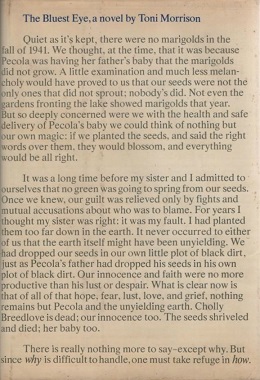
     The general concept of the American Dream exaggerates the number of rags-to-riches stories that seep through the strainer that separates the "closers" from the "losers," while those who get left behind are completely excluded from the equation in patriotic discussion. In fact, those who are filtered out of the success story are the majority of those who chose to participate in this rat race, and end up being circulated through a corrupt system that only awards the good leads to the closers, while tossing the dead leads to those who hadn't been able to make a close. This would seem fair, yet closing a deal is almost completely left to luck, as a salesman can only convince a customer to purchase if they have the means and motives to purchase properties. As Claudia states in Toni Morrison's The Bluest Eye, "it was the fault of the earth, the land of our own, of our town. I even think now that the land of the entire country was hostile to marigold that year. This soil is bad for certain kinds of flowers. Certain seeds it will not nurture, certain fruit it will not bear, and when the land kills of its own volition, we acquiesce and say the victim had no right to live," which parallels to the impervious nature of the boundaries between businessmen and their success as breadwinners (Morrison 206).


     David Mamet's Glengarry Glen Ross is all about the jungle of the workplace; a savage rat race to the top, in which the characters relentlessly chase the unreachable pot of gold at the end of the rainbow. Mamet's play can be best described by Guns n' Roses' "Welcome to the Jungle," as the song describes an introduction to the domain of the cutthroats, applicable to the situation in which Roma, Levene, Aronow, and Moss find themselves. "Welcome to the Jungle" parallels Glengarry Glen Ross, as it describes the same unattainable goal that is at the end of the rainbow of the American Dream; you're always chasing after that ideal of success, but you can never quite get there before the game changes on you. In Glengarry Glen Ross, the hot leads are given to the closers, and the cold leads are given to the losers, securing the caste-like system, so that the winners keep winning, and the losers keep getting fired and losing their sales. This disproves the American Dream, as it maintains the same system of the social hierarchy, smothering equal opportunity in the work field, so "the rich get richer, and the poor get children" (Fitzgerald 95). 


Welcome to the jungle we've got fun and games

We got everything you want honey, we know the names

We are the people that can find whatever you may need

If you got the money honey we got your disease

     The Jungle, an increasingly enticing environment as seen from the outside looking in, seems to be a setting in which the thrill of life flourishes through a constant stream of adrenaline. By "we got everything you want honey," Axl Rose seems to lure the victim into the grip of The Jungle, just as the salesman from Glengarry Glen Ross most likely joined the business as young men with big dreams. It seems almost a direct reference as "we know the names" could be interpreted as the leads from Glengarry Glen Ross, as the company was in control of a solid list of good and bad names that could lead to possible sales. The sales team seemed to be in constant demand for the leads, as it was their way of betting on themselves to be able to make a successful pitch to the customer. Their obsession with the leads turns into an addiction, which leaves them dependent on the company, which took advantage of their "disease" in exchange for "the money" through sales of properties, and even leads themselves.  

Welcome to the jungle we take it day by day
If you want it you're gonna bleed but it's the price to pay
...
You can taste the bright lights but you won't get there for free

     In the office, success is measured "day by day," and the salesmen get a chance to prove themselves through the board. One day, Roma might be a closer at the top of the board, yet he might end the day by losing a sale with Lingk, as he did in the play. Luck plays a large factor in this success, as Levene defends himself for having a bad streak, "... and what is that, John? What? Bad luck. That's all it is. I pray in your life you will never find it runs in streaks. That's what it does, that's all it's doing. Streaks. I pray it misses you. That's all I want to say," which he later backs up, as he is able to break his "bad luck" streak with an $82,000 sale to Bruce and Harriett Nyborg (Mamet 16). "If you want it you're gonna bleed, but it's the price you pay," because the salesmen must ALWAYS BE CLOSING, which means that they must sacrifice everything else, their families, their social life, their own health, to maintain their records as salesmen. In the film adaption of the play, Alec Baldwin says, "And your name is you're wanting. You can't play in the man's game, you can't close them? Then go home and tell your wife your troubles. Because only one thing counts in this life," forcing the men to surrender everything else for the sake of the leads, closing, and, above all, money. 

Welcome to the jungle it gets worse here every day
Ya learn to live like an animal in the jungle where we play
If you hunger for what you see you'll take it eventually 
You can have everything you want but you better not take it from me


     In the hostile work environment in which Glengarry Glen Ross takes place, it becomes evident that the pressure to succeed grows greater and greater everyday, while the men desperately struggle to maintain a steady path to the top. "It gets worse here every day," as the chance that they will fail grows greater, since bad luck infamously runs in streaks, and at some point they know they will hit that streak that puts them out of business for good, unless they can quit while they're at the top. Learning to "live like an animal" is a huge part of life in the dog-eat-dog world of the office, as every man is for himself, and must fight for survival if he even wants the chance to rise above his peers. In this society of Social Darwinism, survival of the fittest is an essential part of life, yet only a few will be able to survive and make it to the top of the hierarchy, while others are left at the bottom, oppressed by their own misfortune and the authority of their former peers. If you "hunger for what you see, you'll take it eventually," as Levene demonstrates his hunger for money, power, and success through his desperate plea to Williamson for a shot at the good leads. "I got to eat. Shit, Williamson, shit," he pleads, but to no avail (Mamet 17). Levene gets backed into a corner, and through his helpless desperation to be successful again, he breaks into the office and steals the leads, as he sees it as his only way to achieve greatness again. 


Wall Street (1987)

Wall Street (1987)

While you are reading my Blog, you can listen this song as a background music. "Money" by Pink Floyd. 


Wall Street is a classical business crime movie. The movie talks about how Wall Street really looks like. A young man just graduated from New York University named Bud Fox, he is a stock salesman. He has to repay all the loans for his studying. Although he is extremely hard working, he struggling a the bottom of Wall Street. In the movie, every successful people can find their previous lives on Bud. By chance, he uses his intelligence to talk with Gekko. Gekko is a typical capitalist, all he cares is about money. Gekko says if Bud wants to join his company, Bud should do something which can interest him. Bud gets lots of information from his father, his college friends and his associates. These information are available for Gekko to do the inside trading. Although inside trading is illegal, it can make easy money. After Bud works with Gekko, he got everything he wants, money, luxury house and beauty. But when Gekko ready to dissolve and contradict the promise to sell the Blue Star, which is company that Bud’s father works there, Bud feels full of guilt. Finally, Bud got his conscience and justice again. He fought against Gekko and saved the Blue Star. He is also arrested by police because of the inside trading. 


Napoleon said that a successful man only exists in two places: on horseback and on woman. In the peace era, there is no war. People cannot ride the horse and kill the enemies. But on the stock market or the financial market, you can find the feeling. Through the computers and networks, you could be flight in an invisible battlefield. You could be a general or a commander. Dispose all the money in the stock market is like you are managing thousands of troops. This is a zero sum game. There would be people who get lots of profit, and there would be people who lost all the money. 
As Gordon Gekko said, “You see that building? I bought that building ten years ago. My first real estate deal. Sold it two years later, made an $800,000 profit. It was better than sex. At the time I thought that was all the money in the world. Now it's a day's pay.” 


Bud Fox: How much is enough? 


Gordon Gekko: It's not a question of enough, pal. It's a zero sum game, somebody wins, somebody loses. Money itself isn't lost or made, it's simply transferred from one perception to another.


This implies how they desire for the money. People cannot earn all the money in the world. There should be a limited. But for Gekko, he is so greedy that he thought earning money should not have a limit. He said the stock market is a zero sum game. But for him, it is an unfair game. He uses his information to control the stock. Although it is illegal, and many people has chance to report Gekko, they didn’t do so. Because they are also “greedy”.  


Conflicting among greedy, money and humanity happens every second in movie. In reality, it also happens. Even though people work so hard and they are full of ambitions, they are struggling on the edge of survival. Those people do not work; however, they have inside information. They make tons of money every day. At this moment, those poor people may change their beliefs and principles of justice. 

This is like what Gekko said to Bud, “Hard working? I bet you stay up so late to analysis those stocks that you want me to buy, right? What’s the advantages? My dad is a salesman for electronic components. He worked so hard everyday, but died of a heart attack at 49. He also owned lots of taxes which is not paid.”


“Greed, for lack of a better word, is good. Greed is right. Greed works. Greed clarifies, cuts through, and captures, the essence of the evolutionary spirit. Greed, in all of its forms; greed for life, for money, for love, knowledge, has marked the upward surge of mankind and greed, you mark my words, will not only save Teldar Paper, but that other malfunctioning corporation called the U.S.A.”
This is what Gekko said when he was at the shareholder’s meeting. I thought it’s pretty meaningful. In the Wall Street, “greedy” is not a negative vocabulary. The greedy is a spark which can provoke people doing better. 


This is about the Gekko's Speech. 


I feel this movie has the common point with Glengarry Glen Ross. Both of the main characters are so greedy on money, though Bud changes his mind at last. And both of them use a cheating way to earn illegal money. I think this could be a familiar phenomenon in 1980s society. People expect the imaginary American Dream too much. In their dream, the standard American Dream should be lots of money, a nice house which is described in The Bluest Eye, and the mother takes care of her children. But all those things are based on money. If you have no money, then the dream would be collapsed. So people start to earn money in a immoral way. 


This is a standard American Dream, a nice house, the gorgeous front yard and a married couple. That is what exactly described in The Bluest Eye


In the Wall Street, Gekko wants to purchase the Blue Star, which he can make a huge profit on that. But he knows the result, if he do so, he would destroy the whole company. Thousands of works would be employed. This would create starving among the civil. Gekko doesn’t care about anything but money. 
Gekko said, “It’s all about bucks, rest of the conversation.” 


In the Glengarry Glen Ross, there is one part that Moss tries to ask what's the name of the Blake, because they never meet before. Blake said "F*** you" to Moss. He doesn't even refer to them by their names. All he cares is about money. The way that he provokes those people to work is brutal. He made a huge "class difference" in the office. It just like the difference between Blake's BMW and Moss's Hyundai. He doesn't care how much time and energy that salesman put in, the only thing he cares is profit. There is no sympathetic relationship between Blake and the salesmen. 


If you are interested in economy, I recommended you to watch this movie

Thursday, October 25, 2012

The Rush: From Glengarry Glen Ross to China's Education System

We are the victims, but this is the only chance.


National College Entrance Examination

        National Higher Education Entrance Examination, known as Gaokao in China, is the annual nationwide exam that almost every high school undergraduates must take in order to be admitted to colleges. It is considered as the toughest test in China.
Well, the SATs are child’s play compared to the Gaokao. If the SATs are the academic equivalent of, say, a brisk footrace, the gaokao is an Iron Man triathlon. Across a minefield and through a piranha-infested river that ends in a waterfall. With people throwing ninja stars at you the whole time! Freaking ninja stars.

        For Chinese high school students, there is almost no way to go to colleges academically without a NCEE score. Throughout the nation, Gaokao is the most significant event for each teenager because their career and future depend heavily on this exam, which directly determines which college they go to. It is controversy in China nowadays because it gives students too much pressure and generates unfair opportunities based on different regions. 

       The normal study time for a high school senior in school is 10 hour, and they are supposed to work until midnight. In order to compete with others, many schools have Saturday classes for all high school undergraduates, and extra classes on some courses on Sundays for some of the students. When becoming an undergraduate, there is almost no time for entertain or extracurricular. In addition, opportunities are exceedingly unevenly distributed among the nation by Gaokao. As people are rushing to the universities in Beijing, and Shanghai, in which the best universities are located, universities in these cities set strict baselines for each province, which favor the local Gaokao takers a lot because the universities admit local students a lot more than outsiders.


How many students are wearing glasses in this video? Why? :)

Most recently, photographs emerged of a classroom in Hubei province, showing students taking energy-boosting amino acids from intravenous drips hung from the ceiling. --BBC News.

The Machines and Academic Hierarchy


        Under the great pressure of Gaokao, more and more high school students become "study machines". Sixteen-hour study time is normal to most of the students. Gaokao takers are categorized by Arts and Science. Arts students will have six subjects: Chinese, English, math, politics, history, and geography; science students have six as well: Chinese, English, math, physics, chemistry, and biology. In the first year of high school, they will learn all of them, and at the beginning of the second year they will choose or "be chosen" to be categorized, and they can not switch for the remaining two years. Such extensive range of courses requires plenty of effort and time, and it keeps making students "study machines". Furthermore, there is little time available for high school students to do sports, activities, clubs, and games. More and more people become fat or weak not because they eat a lot, but because they don't move at all. 
        Such machines can be found in Glengarry Glen Ross by David Mamet; the salesmen say that they are machine. They are so disappointed at the world because they keep trying to sell people the land that they don't want. 
Aaronow: Shelly, the Machine, Levene (Mamet, 64).
Roma: It's not a world of men, Machine... it's a world of clock watchers, bureaucrats, officeholders... what it is, it's a fucked-up world... there's no adventure to it. We are the members of a dying breed (105).
These "study machines" in China will have more than ten mock Gaokao exams during their last year in high school, and their ranks are always told for estimation. In some school during the first two years, students have almost as many exams as they will have in the last year. Some of the exams are designed to categorize students. This system makes different levels of class available to students at different ranks. The high level classes, consisting of the top-ranked students at the same grade, will have the best teachers in school and different treatment, including teaching and homework; they learn things at a faster speed and have some "extra accessibility" of knowledge. The low level classes, however, will take a relatively slow pace and are less productive. This classification of students can be found at not only in high school, but also primary schools, middle schools, and colleges everywhere in China.
Levene: Get the chalk and put me on the board. I'm going to Hawaii! Put me on the Cadillac board, Williamson (63).
Such classification is similar to the board system in Glengarry Glen Ross. The salesman who close the leads, get on the board, and the more they close the better leads they will get, which gives them better opportunities to close again. This unfair system will result bigger distinction among people.

Education Inequality and Social Mobility

        Gaokao has a strong influence in China society. Many children are under strict care of parents about their academics at a young age. For parents, in order for their kids to have a better education in high school, they have to get the appropriate middle schools and primary schools, as well. Since the admission for high school and middle school are also based on one exam similar to Gaokao, children have pressure at a unusually young age. In addition, this system allows bigger and bigger gaps among students since the better ones get the much better education while the lower ones keep getting the lower level education all the time.
        Education inequality happens also in rural and urban areas. Rural areas have an extreme difference from urban areas in economics, and such distinction results a broad range of education levels in different regions. To a family in rural areas, the only hope that they could one day be rich and move to the big city is relied mostly on their children. However, it is way harder for a kid to get to university because the school can not afford higher-educated teachers or advanced facilities. Early in 21st century, there would be a celebration in a town if one were admitted by a university. They see this as a chance of social mobility. Unfortunately, such fortune had rarely happened to poor families. To some extent, education is a key reason why the poor get poorer and the rich get richer in China.


Sources not linked:
Mamet, David. Glengarry Glen Ross. New York: Grove Press, 2012. Print. 

Sunday, September 16, 2012

I Wanna Be A Rockstar

Over time the stereotypical "American Dream" has morphed, taking various forms through out the  course of American history.  Today the Dream has taken the shape of the various Hollywood actors and actresses, the multi-millionaire sports stars, and billionaire business tycoons, all following the motto that "bigger is better" in America.  (This is especially evident in Texas, as EVERYTHING has to be bigger in Texas).  Is this the real American Dream though? Kids idolize these "rockstars" in every sense of the word, and people will do anything to garner even a miniscule chance at attaining this exclusive lifestyle.  Ironically, this is not the "American Dream" of some of the biggest rock stars of the 1990's and 2000's: Nickelback

Perhaps Nickelback's most famous song, Rockstar, describes the yearning of someone who is desperate to become a stereotypical "rockstar," or what Chad Kroeger, Nickelback's lead singer, considers to be the present American Dream.  The song begins with the verse:

"I'm through with standing in line
To clubs we'll never get in
It's like the bottom of the ninth
And I'm never gonna win
This life hasn't turned out
Quite the way I want it to be"

The first two lines suggest that being a "rockstar" includes access to a private social class, much like "old wealth" in The Great Gatsby.  These lines establish a sense of exclusiveness, something that makes being a rockstar much more appealing, similarly to Gatsby's excitement that Daisy has been with other men.  By suggesting that the typical American has given up on the dream through the lines "it's like the bottom of the ninth and I'm never gonna win, life hasnt turned out quite the way I want it to be," Kroeger is intimating that the general population has lost the drive to work for greatness, and now the American Dream is for celebrity status to be handed out as if on a gilded platter.  The lack of work to attain the American Dream could be compared to the Buchanans in The Great Gatsby, who have never worked a day in their life, but lived off of family money,  as both pieces criticize this common misconception of the American Dream.

The second verse begins with Billy Gibbons speaking the words "Tell me what you want," after which the song goes on to describe what the stereotypical life of a Rockstar has become: an infatuation with physical goods that ostentatiously display one's wealth.
"I want a brand new house
On an episode of Cribs
And a bathroom I can play baseball in
And a king size tub big enough
For ten plus me"
Kroeger soon begins singing about what the typical American Dream has become, describing it as infatuation with showy, unnecessary material goods.  The line "I want a brand new house on an episode of Cribs." suggests that wealth is now represented through the size or splendor of one's house, similar to Gatsby's house in The Great Gatsby.  In both Rockstar and The Great Gatsby, the supercilious, strident houses appear to be conspicuous on purpose, in a blatant attempt to make the owners feel that they are living the "American Dream."
"The one on my right was a colossal affair by any standard — it was a factual imitation of some Hotel de Ville in Normandy, with a tower on one side, spanking new under a thin beard of raw ivy, and a marble swimming pool." (Fitzgerald, 5)

 
Even the Buchanan's house, in a much more natural and subtle manner, draws attention to itself, through its stunning shrubbery, and colonial facade. 
 
Gibbons then continues to speak "tell me what you need," suggesting once again that the American Dream is now simply being given out, instead of achieved through hard work and talent, a direct contradiction of the original American Dream.  Later in the hit, Kroeger answers:
"I want a new tour bus full of old guitars
My own star on Hollywood Boulevard
Somewhere between Cher and
James Dean is fine for me"
 
The verse answering Gibbons' question claims that Hollywood is the American Dream, something that we see paralleled in The Great Gatsby. The "new tour bus" suggests that the aspiring rockstar needs the newest and best car, which represents not only one's wealth but their social mobility as well.  The irony of having the bus filled with "old guitars" suggests that the rising generation of rockstars, very much the same as the "new wealth" in the Gatsby,  is attempting to immitate the great rockstars of history, or the "old wealth." The reference to Hollywood creates the illusion that the American Dream culminates in Hollywood stardom, between two legends.  (I think they may have the wrong Dean, but i'm not sure...)


Perhaps one of the most telling verses of the rock ballad is after Billy Gibbons asks how the rising rockstar intends to achieve this stardom, the American Dream. 

"I'm gonna trade this life for fortune and fame
I'd even cut my hair and change my name"
 
These lines epitomize Kroeger's opinion of the mutated American Dream, in which he suggests a desperation has become prevalent.  Kroeger feels that the willingness to trade ones life is a sign of laziness, and a signal that the American Dream is no longer viewed as a product of hard work, a direct contradiction to the original American Dream.  By cutting their hair and changing their name, the rising artists are not achieving the American Dream, but simply creating a facade that they have fallen in love with.  The wan effort, peaking in the willingness to cut hair and change names, as opposed to the hours of practice that created the original rockstars, is distasteful to Kroeger, as he feels this is the polar opposite of what the American Dream should be. 

During the chorus, Chad Kroeger returns to mocking the concept that has been conjured, suggesting that those trying to achieve stardom believe all it takes is material goods.

"And live in hilltop houses driving fifteen cars
The girls come easy and the drugs come cheap
We'll all stay skinny 'cause we just won't eat
And we'll hang out in the coolest bars
In the VIP with the movie stars
Every good gold digger's
Gonna wind up there
Every Playboy bunny
With her bleach blond hair"

Kroeger's excellent use of symbolism and imagery pervade the chorus, and serve as a satire of what truly creates the dream.  The current theory that "hilltop houses" and "fifteen cars" create stardom supports Kroeger's thesis that material goods now create a false American Dream.  This theory seems to have been prevalent for almost a century now, as Gatsby also abides by this wayward theory, as depicted by his flashy rolls-royce, and extravagent home.
Kroeger continues by alluding to the misconception that partying with "movie stars" and beautiful women also bring stardom, something that is ultimately false, and also seen throughout The Great Gatsby


I wanna be great like Elvis without the tassels
Hire eight body guards that love to beat up assholes
The artist references Elvis to keep in sight the ultimate goal of the aspiring stars, yet claims that they don't want the "tassels" which Kroeger uses as a symbol for the work and practice that is required to reach stardom.  This work seems boring and tedious to the dreamer, and they would rather skip straight to "kingship".  Nickelback also references superior power, something that gives off an air of importance, yet suggests that the dreamer will leave this "dirty work" to those he hires, much like Gatsby's servants take care of his house, and tom's hulking physical manner. 

Nickelback continues to follow the theme of those creating a false appearance of stardom as an easy way to the top, suggesting that they will "dress (their) ass with the latest fashion."  By suggesting that these hopefuls will simply follow the fashion of others shows that they are simply attempting to become stars the "cheap" way, and attempting to garner the facade of a star, much as Gatsby tries to garner the facade of wealth with his shirts.  Gatsby is not the only culprit of this crime however, as Tom Buchanan's rakish riding clothes provide an elegant connotation, and support Tom's "elite" appearance. 
"Everybody's got a drug dealer on speed dial"    
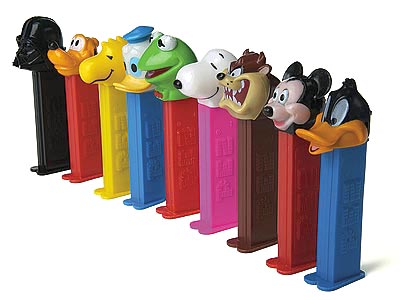
"Gonna pop my pills from a pez dispenser"
Yet another common theme that relates to the American Dream, and is extemely prevalent today in society, is the connection of crime with the American Dream.  This theme suggests that the American Dream has become corrupted, as many people will do whatever it takes, such as crime, to reach their Dream.  As this course to the top has become popular, criminals have begun to recieve "celebrity status," and many rap songs contain references to drugs.  Nickelback too references this theme, suggesting that many aspiring stars will use drugs as a boost to stardom, even though it creates a corrupt sense of the American Dream.  With the use of a metaphor, Kroeger suggests that this has become such a common path that drugs are now taking the place of candy.  The theme of criminality is blatantly present in The Great Gatsby, as it provides Gatsby the mode of transportation through the social class hierarchy, as he smuggles alcohol.

Remarkably, the very same themes that Nickelback create in their satire of the American Dream pervade The Great Gatsby, such as material wealth, exclusiveness, lack of personal ambition, laziness, and crime.  Nickelback's song describes, in their opinion, what the American Dream has come to symbolize today, much the same way that Fitzgerald attempts to satirize the American Dream through The Great Gatsby.  Nickelback criticizes the rising wave of rockstars, and their version of the American Dream, much as the old wealth criticize the new wealth throughout the novel, especially for their atttraction to material wealth.  For example, Fitzgerald brings specific attention to Gatsby's ostentatious house, suggesting that his supercilious attitude about it stems from his theory that having a large and decorative house makes one appear rich, and is a crucial part of the American Dream. 

This trend does not rest soley upon houses, but continues to other material goods, that both authors suggest have been wrongly embraced as a key aspect of the American Dream. Clothing, such as Gatsby's shirts, serve as yet another symbol of social class, and can be seen both in the song and the novel.  The idea of clothes conrtibuting to the American Dream is prominent because of the ability of clothes to create a "rockstar," or wealthy, facade, something that the New Wealthy consider a pillar of the American Dream.  Cars in particular are a vivid symbold of the American Dream, not only representing another entity in which wealthy are able to express extraneous wealth, but also are able to represent mobility among the social classes.  In the song, cars are referenced twice, once as a sign of luxury and status, and the other as a means of transportation through social classes.  This is parallelled in the novel, as Gatsby's car allows him to show off his unearthly amount of wealth, as well as creating the appearance of rising to the highest social class.  The Valley of Ashes, through which Nick passes on his way to the city, suggest that one can simply pass through this lower level of society with a car. This is seen again when Nick notes a memory in New York City, in which he recalls three African American men being driven in a limousine by a white chauffeur.
 
The act of the African Americans being driven suggests they have transcended to a higher social class, and now created a "haughty rivalry" with Nick and Gatsby. 


Part of every American Dream involves some sort of spouse, either a husband or wife, or an attractive woman.  This constant theme of the American Dream is depicted both through Daisy and Jordan in The Great Gatsby, but through the "Playboy Bunnies" and the Playboy mansion in the song.  Nickelback suggests that these women become a symbol of wealth, which is a significant aspect of the American Dream, according to The Great Gatsby and Kroeger.  The same could be suggested about Daisy and Jordan, as both come to represent the American Dream and wealth through out the entirety of The Great Gatsby.

 Daisy soon represents Gatsby's aspirations of wealth and elite social status, while her voice is described as "full of money" by Gatsby on page 120.  The idea that women represent the American Dream not only for Gatsby, but also for Nick and Tom, as all three struggle to retain the attention and affection of women.  Gatsby in particular feels that his dream cannot be fully attained without Daisy, suggesting that women are the American Dream.  A parallelism can be seen between the "Playboy Bunnies" and Daisy, as both represent the American Dream and money, one as a symbol of wealth to the two men she is in love with, and the others as associates of fame and a business. 

A theme considered throughout the novel and song is that of crime, and how the American society has come to "popularize" crime and drugs.  Similar to Nickelback suggesting that drugs are an integral component of the current American Dream, Tom revelas that bootlegging is the foundation of Gastby's.  Gatsby has transcended social class through the abuse of crime, making his immense fortunes from providing alcohol, a drink that is established as a favorite of the wealthy throughout the novel.  The fact that Gatsby has arisen through this illegal practice, and, in his opinion, never reaches his ultimate dream, suggests that crime creates a "corrupt" version of the American Dream, something that is restated by Kroeger through "Rockstar."


A final stirring connection is the desire for popularity, expressed by both of those trying to attain the American Dream, in the novel and song alike.  In the song, Kroeger satirizes the idea that stardom can be achieved simply by injecting youself among other rich or famous people, such as the Playboy Bunnies, Elvis Pressly, Cher, or the "VIP's" or "movie stars."  This concept is likened to Gatsby's attempt to popularize himself through his extravagent parties. 

Both works of art are satirical of the American Dream, with both suggesting that the flawed concept of material wealth, women, and popularity have all come to represent the American Dream.  In The Great Gatsby, the American Dream is suggested to be "old wealth," something that is inattainable through one generation.  Rockstar, however, suggests that the American Dream is  fame, stardom, and wealth.  The satirical effect of both works focus upon the flawed materialistic view, which contradicts the original American Dream of achieving prosperity through hard work.


Saturday, September 15, 2012

Not Enough Life Boats: Social Class in the Titanic and the Great Gatsby


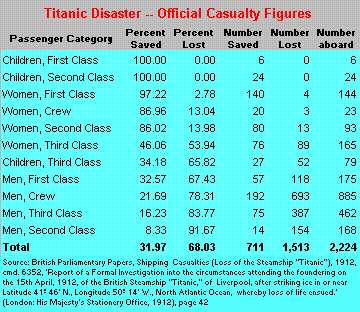
     When the unsinkable “Ship of Dreams”, Titanic, hit an iceberg on April 14, 1912, during her maiden voyage, roughly 1500 people perished in the icy waters of the Atlantic.  This great maritime disaster has been immortalized in popular culture through James Cameron’s 1997 film Titanic starring Leonardo DiCaprio and Kate Winslet.  In addition to being a touching love story, the movie delves into the reality of social class boundaries in the early twentieth century, that the social strata into which a person is born defines their life, and even death.  Among the first class, people are not permitted the freedom to marry for love or befriend inferiors because of the necessity to maintain the money and titles in the hands of the aristocrats; their lives become void of surprise and emotion.  The people who attempt to transcend the borders of class, the “new money” passengers, still face condescension from those of “old wealth”, even though they possess the same monetary status because they are seen as “infected” by their poor past.  Despite all of the passengers being “in the same boat” as the ship plunges into the depths, their socioeconomic roles decide their fates because those holding first class tickets have priority of survival over the people in the second and third class. 

     The protagonist, Rose DeWitt Bukater, is an upper class, seventeen-year-old girl whose betrothal to thirty-year-old Cal Hockley was arranged by her mother so as to maintain her wealth after her father left them greatly in debt.  Near the beginning of the film, Rose attempts to commit suicide by jumping off of the stern of the ship because she sees no other way out of her societal prison–her strictly regimented life in which she has no control or freedom.  The elder Rose, who narrates the story to treasure hunters in the modern day, describes her dilemma:
“I saw my whole life as if I'd already lived it. An endless parade of parties and cotillions, yachts and polo matches. Always the same narrow people, the same mindless chatter. I felt like I was standing at a great precipice, with no one to pull me back, no one who cared... or even noticed.”
Despite having the greatest privileges, Rose is trapped by her status because the thrill of all of the activities which she attends is blocked by the deliberate lack of emotion in all of the gatherings.  She calls her acquaintances “narrow” and “mindless,” showing that, to them, the world is a playground, and none of the world’s problems strike them with initiative.  She feels that the upper class is a cold place where people do not care about anyone besides themselves, money, and the family name.   One of the major decisions in her life, her husband, was made for her, demonstrating that in her world, people’s fates are determined whether they like them or not.  To take control of her own fate, Rose nearly dives into the Atlantic, but a young third class passenger, Jack Dawson, persuades her to climb back onto the ship.  Over the course of the movie, Jack teaches Rose how to go about life looking forward to new, exciting things, living from day to day.


This spontaneity intrigues her, but Rose is constantly wavering on her connection to him because her mother looks down upon Jack, persisting in advocating on behalf of Cal.  She finally decides to abandon her place in the upper class world in pursuit of love, reclaiming her freedom and breaking away from the social class pyramid.   

 
    Outside of Jack and Rose's love story across the social hierarchy,  the "Unsinkable" Molly Brown faces discrimination from the other first class ladies because she is "new money."  Instead of welcoming her into their high society, they look down upon her.  When she tries to join them for tea, they see her coming and leave the room.  Her last name, "brown", is a common surname with no particular associations to royalty or wealth, proving that to truly be accepted in the plutocratic world, you must both have money and a title.  Without both, the dream may as well be dead.  Still, Molly does not give up on her American Dream, and even tries to help Jack fit into his surroundings.  She gives him the means to dress like a gentleman, as well as provides him with pointers on how to interact with the elite.  
"Ain't nothing to it, is there, Jack? Remember, they love money so pretend like you own a gold mine and you're in the club."
While she does not quite understand that she is not entirely welcome in the aristocratic society, she at least makes the effort to leave the door open to success behind her, instead of slamming it shut like the rest of the first class passengers.  

     When the Titanic becomes a life or death situation instead of a pleasure cruise, a seat in a life boat suddenly becomes the most valuable thing in the world.  Instead of carrying adequate space in life boats for all of the passengers aboard, Titanic had only twenty boats, enough for about half of the little over two thousand customers.  When boarding the boats, women and children are loaded on first–women and children of the first class, that is.  
When Rose and her family are ushered over to one of the lifeboats, her mother is more concerned with class separation than everyone's survival.  
Ruth: "Will the lifeboats be seated according to class? I hope they're not too crowded."
Rose: "Oh mother, shut up! Don't you understand? The water is freezing and there aren't enough boats. Not enough by half. Half the people on this ship are going to die."
Cal Hockley: "Not the better half."
It is clear that even in the face of a terrible disaster, Cal and Ruth are still so caught up in their own superiority complex that they deny the meaning of the life of a third class passenger.  Unfortunately, the ships crewmen, too, operate on this philosophy that the lives of the rich are more valuable, locking the third class ticket holders behind bars in the lower decks.  Some of the lifeboats are only loaded to half capacity, trying to increase the comfort and safety of those aboard.  At one point, Cal tries to bribe his way onto a boat.  Once the Titanic is fully submerged, and fifteen hundred people are treading the freezing water, Molly Brown tries to convince her life boat to turn around to rescue some of the people, but gains no support from her selfish shipmates.  


     Like on Titanic, in early twentieth century America, the setting for F. Scott Fitzgerald's The Great Gatsbyclass determined fate.  When Gatsby falls in love with Daisy, he knows they are doomed because as a member of the lower class, he "had no real right to touch her hand" (Fitzgerald 149).  Similar to Jack Dawson, Gatsby feels like he does not belong in the upper class world, that every second he spends with Daisy is a moment stolen.  When Daisy is given the choice between financial security and class with Tom and Gatsby's "spectroscopic gaiety", she makes the opposite choice from Rose, allowing her fate to be controlled by her name instead of her desires.  Daisy, like Rose's mother, considers "new wealth", the American Dream, to be appalling because it "herded its inhabitants along a shortcut from nothing to nothing" (107).  Daisy views this emerging class in the same way that the first class passengers see Molly Brown–as an invasion into their exclusive club of money and titles.  In the same fashion that the third class deaths from Titanic are seen by the first class women as "collateral damage" or unimportant, the deaths of Gatsby, Myrtle, and George are forgotten by Tom and Daisy Buchanan because they "smashed up things and creatures and then retreated back into their money or their vast carelessness" (179).  Daisy does not return for Gatsby's funeral despite her role in causing his death, but rather simply moves on with her life, staying in her comfortable, upper class, carefree lifestyle with her husband Tom.    Likewise, once the lifeboat carrying the first class women is safely away from the sinking ship, it does not come back to save the lives of others.  The rich proceed with their lives like a "deathless song", while the poor or formerly poor suffer and die around them (96).  Titanic and The Great Gatsby both imply that, in this time period, the social hierarchy was incredibly hard to overturn, and when it came down to life and death situations, those at the top of the pyramid would prosper while those below would perish.  

Thursday, May 3, 2012

"Look Twice": Black Star Revises The Bluest Eye


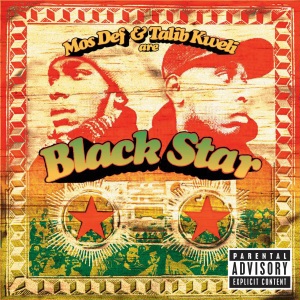
Mos Def and Talib Kweli are Black Star (10) album cover
First edition of Toni Morrison's The Bluest Eye (1970)


In the true meaning of "revision," seeing something anew, Talib Kweli and Mos Def of the rap group Black Star, revise the words and the ideas of Toni Morrison's The Bluest Eye in their song "Thieves in the Night" from their self-titled debut album. The song takes its title and its chorus from the closing passage of the novel in which the child narrator, Claudia, reflects on how her classmate Pecola was ostracized unfairly by the black community (and the larger white community) for her alleged "ugliness." Kweli and Def affirm Morrison's argument that, as they put it in the song, "the law of the bluest eye" still governs black experience in America: Anglo-Saxon ideas of beauty, blue eyes, straight, blond hair---are considered the norm. But the rappers also update these "laws" and show how their "jurisdiction" has extended from the segregation-era ideas of racial beauty that the Nobel Prize laureate critiques in her first book. Kweli writes in the liner notes to "Black Star" of reading The Bluest Eye in a high school classroom and how the novel, as he writes, "struck me as one of the truest critiques of our society, and I read that in high school when I was 15 years old. I think it is especially true in the world of hip hop, because we get blinded by these illusions." Within the "hip-hop" context of postindustrial urban African American communities, "the law of the bluest eye" still applies, it guides the actions of the police state in its management of inner-city black bodies.

Kweli at Rawkus Records in NYC, 1999

Mos Def's second verse of "Thieves in the Night" perhaps provides the closest reading of the novel in the song. He begins, "Yo, I'm sure that everbody out listenin agree / That everything you see ain't really how it be." This idea that seeing is not being is critical to The Bluest Eye: Pecola's "ugliness" is never confirmed literally in the text; her lack of beauty is how she is seen by white society, not how she actually looks. Mos Def, though, sees something of the psychology of Pecola's "racial self-loathing," as Morrison calls it in her Afterword, the internalized racism from which Pecola and others in the novel suffer, in contemporary inner-city black male youth:
Most cats in my area be lovin the hysteria
Synthesized surface conceals the interior
America, land of opportunity, mirages and camoflauges
More than usually -- speakin loudly, sayin nothin
Morrison links Pecola's negative self-image to the broader images of normative American identity, family, and home through the juxtaposition of the Breedlove household with the idealized household of Dick and Jane from the primary readers. For Def too, there is a broader national narrative at stake, the very idea of the American dream is little more than a "synthesized surface" that "conceals" a far less hopeful reality. Mos Def seems to argue that it is the worship of materialism, integral to the American dream, that is particularly problematic in black communities when he raps "Gets yours first, them other niggas secondary / That type of illin that be fillin up the cemetery." For Def, the rampant consumerism, perhaps in the rap songs and videos of more mainstream artists, is a form of "mental slavery": "Put you on a yacht, but they don't call it a slaveship." The binary system of racial identification of the Jim Crow era still lingers in the late twentieth century when African American men must chose between being "niggas or Kings." Moreover, the establishment of one's "monarchy" seems contingent on exerting one's power over other blacks, just as Pecola is used as a scapegoat by the larger black community in their establishment of the dichotomy between "niggers" and "colored people" (87).

The American dream family according to the Dick and Jane primers

And fantasy it was, for we were not strong, only aggressive; we were not free, merely licensed; we were not compassionate, we were polite; not good but well behaved, and hid like thieves from life. We substituted good grammar for intellect, we switched habits to simulate maturity; rearranged lies and called it truth, seeing in the new pattern of an old ideas the Revelation and the Word. (206)
The title of Black Star's song seems to argue that blacks are still in some ways hiding their true identities, like "thieves in the night," as a result of the pressures to conform imposed by mainstream American society. By revising the final passage of The Bluest Eye in the chorus to the song, they repeat and develop Morrison's argument that the conformity of assimilation is a kind of social death, in her words, "hiding from life." The idea of being "not strong...only aggressive" bears a specifically interesting relation to the image of the "thug" in modern black life--inner-city gangsters, Def and Kweli seem to argue, are street tough but not truly "strong" in the sense of strength of character. In lyrics added to the final paraphrased passage from The Bluest Eye, Black Star reiterate that young black men may be "chasin' after death," but are not truly "brave." In a clear reference to the style of 1990s gangsta rap, Talib Kweli writes in his first verse to "Thieves in the Night":
Survival tactics means bustin gats to prove you hard
Your firearms are to short for God
Without faith, all of that is illusionary
Raise my son, no vindication of manhood necessary.
The underground rappers are searching for a form of black masculinity not defined by one's "hardness," but by more spiritual qualities like faith and family. Like Morrison does in The Bluest Eye, Black Star attempts to "find beauty in the hideous." Again, for Kweli and Mos Def, the "thug life" is part of the legacy of American chattel slavery with the prison-industrial complex serving as the postmodern plantation.
[M.D.] Not strong
[T.K.] Only aggressive
[M.D.] Not free
[T.K.] We only licensed
[M.D.] Not compassioniate, only polite
[T.K.] Now who the nicest?
[M.D.] Not good but well behaved
[T.K.] Chasin after death
So we can call ourselves brave?
[M.D.] Still livin like mental slaves
[Both] Hidin like thieves in the night from life
Illusions of oasis makin you look twice
[Both] Hidin like thieves in the night from life
Illusions of oasis makin you look twice