Saturday, May 12, 2012

Lil' Kim: A Heroic Harlot


Lil' Kim: clearly promiscuous, completely open and comfortable with her sexuality...should the American society she lives in praise or condemn her for her lewd behavior?


"How Many Licks" by Lil' Kim (featuring Sisqo)

Like many other female R&B, Hip-Hop, and Rap artists, Lil' Kim has no problem showing her body and embracing sexuality. Why is the female celebration of sensuality so strongly frowned upon in American society? Openly sexual male Hip Hop artists, like Snoop Dogg, rap about women who please them sexually, receive historically receive less criticism, while when female artists, who say the same thing, essentially, receive more criticism because the message was voiced from a female, like Lil' Kim. There are people that would simply affirm his lyrics and make statements along the lines of "Snoop is such a baller," and wouldn't comment on his blatant disrespect towards women, or question his behavior. On the other hand, it seems that when female Hip-Hop artists, like Lil' Kim cannot seem to escape ridicule. It seems that many of the same people who render themselves avid fans of artists like Snoop Dogg cannot bring themselves to appreciate similar messages from female artists. If there are Americans that can accept men who explicitly express their enjoyment of sex, why does the double sexual standard exist? 


                             Versus              


Sigmund Freud's Madonna-Whore Dichotomy details the initiation of  the sexual double standard. Men with this complex habitually classify women as being either virtuous or whorish. However, this mindset disallows true happiness because these men cannot be sexually satisfied by the pure, virginal women they profess to love, yet at the time they cannot come to love the type of whorish women that they are sexually attracted to. In American society, women's expression of sexuality is a Catch 22. Men eminently transmit frustration towards the Madonna because of her prudence, but continue to seek these women. Though when a woman, like Lil' Kim, behaves conversely and expresses her sexuality freely, she is often subject to public scorn. This sexual oppression indubitably manipulates a large number of women into believing that this type of binary identification is realistic. Women that struggle to overcome the standard are under the impression that they must either obliterate their Madonna status, causing men to lose respect, or they must remain a Madonna who is criticized and also miserable since they must restrain natural inclinations to sustain that status.


Lil Kim' and Toni Morrison use their works to debunk societal perceptions based on the Madonna Whore Dichotomy. The motive driving these women being the challenge of guiding women to unlearn the self-prejudice they may have learned. In Morrison's The Bluest Eye, the women in the novel are strictly classified as either Madonna figures, like Geraldine, or whores, like Miss Marie, Miss China, and Miss Poland. Morrison attempts to redefine the construct of beauty, which directly correlates to the strict societal convention of women's sexuality. The author emphasizes the societal pressure to succumb to the sexual stereotypes through characters, like Gerladine. While Lil' Kim, over sexualizes herself, striving to enlighten women, and free them from definitive sexuality. Through their different mediums, these women present American culture's mechanical control over how women should define their sexuality.

In the the initial factory setting of the Hip-Hop artist's "How Many Licks?" video, Lil' Kim establishes that society controls the idea of what it means to be a woman. The screen shot of the liquid mannequin mold, as the word "original" flashes across the screen, symbolizes many women's vulnerability to society's pressure to a become a Madonna. Without the shell, the liquid is not required to take any specific shape. Similarly, without the double standard,  women would not feel that they are either a whore, or a Madonna, but a woman whose sexuality is only a function of her humanity. The second frame of the cooked mold, with the word "realistic," suggests that the influence of the shell, or societal pressure, prevents many women from taking on their own identity. However, these women are entrapped in the shell, believing they must take on the perfectly refined Madonna mold. The influence is so strong that women, like Geraldine of Morrison's The Bluest Eye, might as well be a one of the molds in Lil' Kim's video.


In the novel, the white iconic figures of the media cause these black women to reject their identity, preventing them from embracing their bodies and connecting intimately with others. Because these women cannot be the Shirley Temple valued by society, they consume their energy assimilating whiteness. The influence of societal perceptions is so extreme that when Geraldine-like women, have dreamed of being free of their identity insecurities, they "have looked long at the hollyhocks in the backyards"; they focus on the flowers typically native to Asia, in otherwise natural foliage (82). Instead of admiring the nature, Geraldine and the type of women she represents, solely stare at the beauty of the flower that should not be there; the identity they should not be rooted in.

Geraldines reject their black identity because they haven't learned to love the identity that fits them. Therefore they are ashamed of their body and do not know that they "got in goin' on" ("Big Momma Thang," Lil' Kim, ft. Jay-Z, Lil' Cease). In fact, their shame and inherent self-consciousness galvanizes an inability to connect emotionally and physically during sex because they do not consider themselves beautiful. When Geraldine and her husband have sexual intercourse, he must only lift "the hem of her nightgown to her navel" (84). Since the Geraldines do not have to reveal their bodies fully, they evade the humiliation of completely facing the "racial self-loathing" that is normally suppressed. Despite that they "wonder for the six hundredth time, what it would be like to have that feeling," the Geraldines are not proactive; they do not seek to engage themselves sexually with other people. Instead, their dream Their dream of unobtainable "beauty," induces them to compensate the lack of intimate, sensual connection. Attempting to fulfill the role of sexual interaction, Geraldine nonchalantly engages with her cat as a substitute. She often "will accept the strangely pleasant sensation that comes when he writhes beneath her hand and flattens his eyes with a surfeit of sensual delight" (85). She does not render the interactions strange because  of the extent of her sexual frustration, nor because a cat substitutes masturbation; she describes the feeling as strange because she is not accustomed to sensual gratification.

Because there are a plenitude of American women today affected by societal perceptions and struggle with sexuality, female artists like Lil' Kim over sexualize themselves in order to teach women that sexuality is simply a function of humanity. In the "How Many Licks?" video the singer communicates that she aims to diminish the vapid notion of sexuality as the mannequin transforms into Lil' Kim. This screen shot conveys the artist's message that women possess the power to take control of their sexuality. They do not have to be the mold society pressures them to be. From this video, one can easily observe that Lil' Kim has found the strength within herself to negate the double standard, ultimately giving her the ability to embrace her body. She can freely express her sexuality and even comfortably discuss times at which she was the "only one that could handle him" with pride (53). The manner in which she boldly struts down the runway, explicitly describing some of her sexual experiences suggests that Lil' Kim does not allow others to define and inhibit her.

Rather, she transforms a concept many women accept: the components female power. From a young age parents teach their daughters that the female body is precious, the value of virginal preservation, and the male responsibility to serve women through heroism and chivalry. Lil' Kim's personal philosophy seems to be that if men are to serve women, she would like them to serve her sexually. Thus, she refuses to implore the parent taught components of female power by refusing to provide a womb and follow specified gender roles. She also embraces the power all women have over men, but asserts it uniquely. Lil' Kim creates a personal sexual standard that is appropriate for the type of life style she desires to engage in. Most importantly, because Lil' Kim remains in control of her social interactions and actually enjoys them, she does not allow others to punish her by labeling her a whore.

Disclaimer: In the below paragraphs, I am not advocating prostitution. Thousands of women are forced into prostitution as a necessary means for survival. There is also an extreme amount of women abducted and exploited in sex trade every day. I believe prostitution is an injustice no woman should ever experience. I am, however, arguing against the double sexual standard.

The Bluest Eye prostitutes are similar to Lil' Kim in the sense that they embrace themselves fully and do not let others define them. Even though their clientele may perceive them as a service, they possess the confidence the Geraldines lack. When Miss Marie playfully teases Miss China about her skinny legs, China retorts, "Don't worry 'bout my bandy legs. That's the first thing they push aside," and "all three of the women laughed" (52). The prostitutes are clearly not ashamed of their sexuality and because they embrace it, they do not feel the pressure to be a Madonna or assimilate whiteness. They do not practice self-prejudice, but embrace their black identity, keeping their hair curly, unlike the Geraldines who straighten their hair (53). More simply, they tell "haters, I paid y'all no mind" ("No Matter What They Say," Lil' Kim). The prostitutes are also the happiest characters in the novel. Not only do they frequently joke and laugh, but they do not complain about money or the work they do. Miss Marie tells Pecola that when she found out somebody would pay her for sex that "you could have knocked me over with a feather" (55). Thus, not only does Miss Marie take delight in her occupation, but she chose to be a prostitute, she is in control, like Lil' Kim.

Though they possess the liberty the Geraldines envy, Morrison indicates they only possess it because of their whorish identity. The author does not create any other openly sexual female characters in the novel; indicative of some Americans misconception that all openly sexual women are whores, or "sluts," while other women are prudish and restrain themselves, like Geraldine. In Black Star's song "Thieves in the Night," Talib Kweli and Most Def extrapolate on the "law of The Bluest Eye" (ll. 3). America claims to be a "land of opportunity," where diverse peoples and beliefs are welcome, yet many people suffer from  various types of binary identification. Referring to American culture Most Def states,"We either niggaz or Kings/Bitches or Queens"; we are not complicated individuals, but unrealistic stereotypes, placed into categories based on theories and constructs like Biological Determinism, beauty, and the sexual double standard.


"Thieves in the Night"
Blackstar
Songwriters: TALIB KWELI GREENE, DANTE SMITH, CHARLES NJAPA


Thursday, May 10, 2012

The Bluest Eye; Barbie's Effect on Modern Day Children


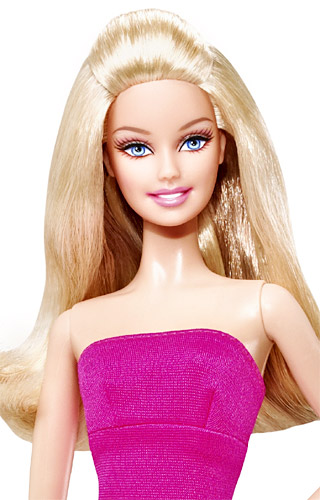
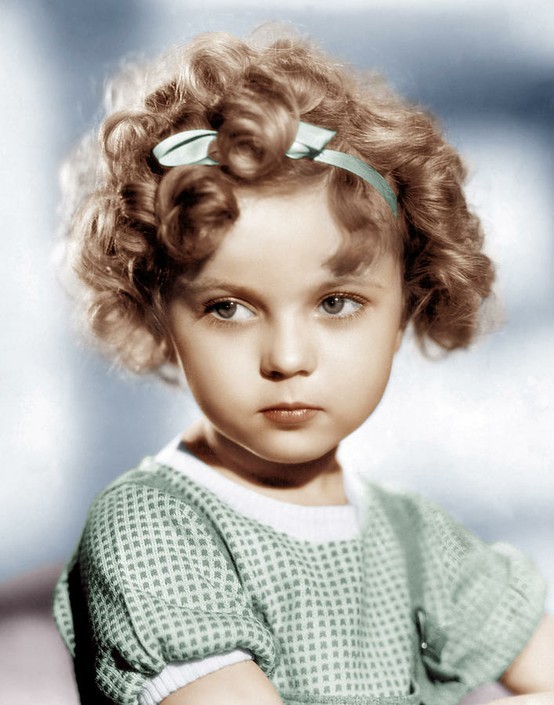
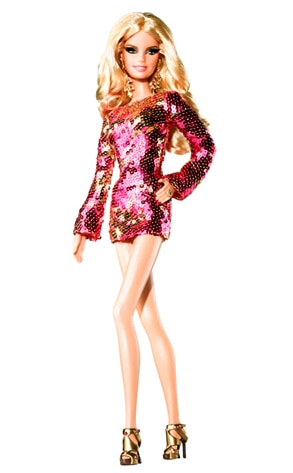
barbieThroughout the centuries, young children often look up to various role models and icons and emulate and try to be like them. Young girls particularly feel as if they must look and act perfect in order to fit in to society and be liked. In Toni Morrison's The Bluest Eye, Shirley Temple and Mary Jane are the prominent figures in which young black and white girls look up to. In today's world it is no different. Even though the racial prejudices shown in The Bluest Eye are somewhat gone now, the perfect looking figures that children look up to are still here, such as Barbie dolls. Typically, Barbies are white skinned with blonde hair, blue eyes, and a perfect body. Because many girls in the United States own a Barbie at a young age, they are being taught how they should to look and act in the eyes of society. Similarly, Shirley Temple was seen as the 'perfect' girl in the 1940s, which is why so many children, including Pecola, felt inferior when they did not look the same way. 


One character in the novel, Pecola Breedlove, comes from an unstable family that is viewed as ugly by society. They live right above a store in one of the worst parts of town, and the store consists of glass walls. The glass walls represent the Breedlove's as a display for society to see; a display of something ugly and undesirable. Their humiliation is not private and they are hyper visible; people know that they are there but choose to stereotype them. Just by looking at the Breedlove family, you "wondered why they were so ugly; you looked closely and could not find the source...It was as though some mysterious all-knowing master had given each one of them a cloak of ugliness to wear, and they had each accepted it without question. The master had said, 'You are ugly people.' They had looked about themselves and saw nothing to contradict the statement; saw, in fact, support for it leaning at them from every billboard, every movie, every glance" (39). There is no distinct ugliness about the family, however, society automatically pegs them as undesirable because they look nothing like what is considered 'beautiful'. Beauty, as shown in "every billboard, every movie, and every glance," was perceived as being white, just like Shirley Temple and Barbie. Even though today's modern society likes to think that we have grown to be more diverse and that any person can be beautiful, there are still the same expectation that are shown in The Bluest Eye. In fact, our society today relies even more on trying to fit into this role of beauty, by going to extremes to be 'pretty' and look more like a Barbie.  


Given her unstable family, Pecola finds it hard to embrace and find beauty in her natural self, causing her to want to change, and be more like the 'beautiful' little girls: Shirley Temple and Mary Jane. Pecola lives vicariously through these icons on a regular basis. Claudia says that Pecola "was fond of the Shirley Temple cup and took every opportunity to drink milk out of it just  to handle and see sweet Shirley's face" (23). Pecola could not be more different than Barbie and Shirley Temple, however, she feels a slight bit of empowerment when she gets to at least see Shirley Temple. She does that same thing with Mary Jane candy. Pecola yearns for the blue eyes of Mary Jane, and "to eat the candy is somehow to eat the eyes, eat Mary Jane. Love Mary Jane. Be Mary Jane" (50). Pecola ignores any bit of uniqueness that she has just so she can be more 'beautiful', even if it is just for a few moments. Because she is so unhappy and dissatisfied with the way she looks, Pecola feels as if the one thing that could fix her discontentment would be to have blue eyes. Girls in the twenty first century lack this confidence as well and think that if they somehow look more similar to Barbie- a bit skinnier, prettier, or different looking in some way- they will be happier. This self degradation has always occurred in children because they see that the most beautiful icon, either Shirley Temple or Barbie, looks nothing like them. 


The exaggerated 'beauty' and perfectness of a Barbie is unrealistic and gives children false pretenses as to what they should look like. Society has manipulated children through advertisements and social icons, however, sometimes it is hard to actually discover where the true beauty lies in these figures. Similarly, Claudia is given a white doll for Christmas, and spends a copious amount of time dissecting the doll, trying to find out the 'beauty' in it that everyone talks about. Even though, "adults, older girls, shops, magazines, newspapers, window signs- all the world had agreed that a blue-eyed, yellow-haired, pink-skinned doll was what every girl treasured," Claudia is not yet convinced (20). Most people view a Barbie as beautiful because that is what they see advertised every day as being pretty; any look different from this is often considered not as beautiful. American society forces people to judge others by looking at their physical qualities and automatically pegging them as either beautiful or ugly.


barbie


Sunday, May 6, 2012

The Power of Ads


The questions that one may ask themselves while reading this novel are, how can one hate oneself so much that they attempt to look, act, think like someone they are not?  To desire something so far from their reach that’s not even worth wishing for? How can they deny the simple things that make one happy to just please society? Morrison’s answer is advertisement of what the majority see as acceptable through the media, magazines, etc.


~~~~~~~~~~~~~~~~~~~~~~~~~~~~~~~~~~~~~~~~~~~~~~~~~~~~~~~


In her novel, The Bluest Eye, Morrison points out to her readers that because of all the attention white American girls and women had during the 40’s, it had an undeniable negative effect on the African American female community, like it does to Pecola, Geraldine, Pauline, and to some extent, Claudia.  In this heart-breaking novel, Toni Morrison answers the “how” to the “why” her main characters are they way they are due to society’s perception of beauty.  For one, the advertisements have a major role in manipulating the minds of little black girls, such as the characters in Morrison's novel.  One of the main characters, Pecola, thought that if she had blue eyes, everyone would like her, approach her, and not be repulsed by her.  She desired to have blue eyes because she saw that being like them, the “pretty” girls, was the only way to beautiful during those times.  Not only did she see beauty in them, but she also saw a greater power in the blue eyes: that with blue eyes, the bitter and violent fights her parents had would stop because they would say, "Why, look at pretty-eyed Pecola. We mustn't do bad things in front of those pretty eyes.” (46). Pecola did not feel beautiful due to those reasons and in result, her insecurity was visible to others around her.  Her low-confidence in herself allowed black boys and girls to pick on her, ignore her, and treat her differently. Pecola, however, is not the only one craving to be more like the white girls, Geraldine is also on that same boat.


Morrison, interestingly enough, starts the chapter about Geraldine by introducing her as “they”.  By presenting Geraldine as “they, Morrison tries to point out to her readers that there was a social pressure for “colored” women (Black women who imitated white women).  They are expected to embrace the majority, and disregard their individuality to be accepted and allie themselves with the women superior to them, white women.  For example, like many white people in the 40’s, Geraldine is against trying to connect with black folks because they were known as dirty, uncivilized, and a minority to the white men and women.  This hatred of her own kind, leads to self-loathing, a major issue during this time for African Americans that Morrison emphasizes to her readers in this chapter about Geraldine in particular. By hating her own skin, Geraldine becomes very insecure with her body and is afraid of feeling dangerous, risky, exciting, and so on.  By both being disgusted by black men and women and her insecurity, she is incapable of enjoying sexual intercourse with her own husband.  Something that is supposed to be so beautiful and natural is bluffed and meaningless. She wonders, however, “what it would be like to have that feeling...”, but does not allow herself to feel such feelings or desires because she wants to keep her reputation of a clean and civil woman, as colored women were supposed to act (85).


~~~~~~~~~~~~~~~~~~~~~~~~~~~~~~~~~~~~~~~~~~~~~~~~~~~~~~~~~~


Nowadays, society see’s beautiful as having the perfect body, skin, hair and, of course,clothes.  Not too much different than 72 years ago, but it has been over exposed now that everything gets around much quicker for everyone around the world to see.  For example you have the magazines such as Seventeen, People, Cosmo, J-14, and tons more that talk about being fit and having the “summer bod” to have all heads turning.  For the majority of all those magazines, their models are skinny, tall, have the ideal body and their skin is flawless.  However, they will be and are photoshopped, which has us believe that people could possibly look like angels or something close to that. And though a lot of its readers know they are photoshopped, they still aim for the goal to have all those “perfect” traits.  Another example is the Victoria Secret models.  Girls obsess to have what they have, to be able to walk in a tiny, ityy-bitty bikini and not have to worry about belly rolls or legs that jiggle like jello. Third, movies, commercials, and T.V. shows also play a big part in the mind-controlling business of advertising.  In most, if not all movies that are of love or for teens specifically, somehow always have the main girl and guy be absolutely flawless.  Of course, after fantasizing to have that one cute guy fall for her, she wants to be like the girl in the movie, perfectly desirable. With T.V. shows its a little different.  Soem reality T.V. shows are meant mostly for entertainment, but unconsciously its advertising to its audience how to behave, appear, and think.  Evidently, these T.V. shows such as Jersey Shore, Bad Girls Club, Super Sweet Sixteen, and many more have had an effect on girls, especially, with other shows that show the outcome of these behaviors with 16 and Pregnant and True Life.


The pressure that society a couple years ago, and even now, was putting on teen girls and women had unfortunately caused a lot of issues that back in the 40's were not very known or even done.  More and more girls had become anorexic trying to reach the ideal body, which in many cases have lead to extreme situations having to be done to them or the disease would even cause an early death.  Not only this but for old and young women, plastic surgery was becoming very popular, still is. These choices were and are not made because they actually were in real need of it, but its done to change their appearance to look and feel more like the celebrities and models in perfume, swimsuit, clothing commercials and magazines. Today, society and the media are the little devil whispering in their ears to tell them what is beautiful, and that they are not it and will not be until they have exactly what the beautiful girl in the magazine has. But I cannot say it hasn't gotten better, because it has.  Now, not only women but also men have been realizing the dangers of the media and how much power it has over the minds of young girls, in particular.  In addition there have been sections in magazines and some shows about how to bring yourself up, how to be confident without having to change your looks.  But a lot of girls still want perfection, and its something Toni Morrison suggests we pay close attention to; that the insecurity that Morrison expresses with her readers of what African American women felt during many decades, especially in the 40's, is now in the minds and souls of the black, colored, white, young, and old. It gets to a point were young women and teens try so hard to impress and imitate idolized models and actresses, that they do whatever it takes to get there, and what takes to get there isn't always the best or safest choice.

Thursday, May 3, 2012

The Bluest Eye and Dubois' The Souls of Black Folk


W.E.B. Dubois’s The Souls of Black Folk introduces two concepts describing the blacks’ experience in America: the veil and double consciousness. Both The Souls of Black Folk and Toni Morrison’s The Bluest Eye emphasize the racial self-loathing blacks have once they fully understand how different they are from whites. They begin to feel inferior to whites and do not view themselves as true Americans. Most would rather either become white, or disappear and become invisible. Blacks grow up learning how to objectify beauty; it something that is taught, and it is generally defined as having white skin, blue eyes, and nice hair. Once blacks learn these standards of beauty, they accept themselves as ugly without question. They proceed to live their lives, ashamed of their appearance and their ultimate lack of whiteness. This shame draws out the concept of the veil, which is used by blacks to hide their ugly appearance from white judgment and disapproval.

"How does it feel to be a problem? I answer seldom a word.  And yet, being a problem is a strange experience, -- peculiar even for one who has never been anything else, save perhaps in babyhood and in Europe. It is in the early days of rollicking boyhood that the revelation first bursts upon one, all in a day, as it were. I remember well when the shadow swept across me. I was a little thing, away up in the hills of New England, where the dark Housatonic winds between Hoosac and Taghkanic to the sea. In a wee wooden schoolhouse, something put it into the boys' and girls' heads to buy gorgeous visiting-cards -- ten cents a package -- and exchange. The exchange was merry, till one girl, a tall newcomer, refused my card, -- refused it peremptorily, with a glance. Then it dawned upon me with a certain suddenness that I was different from the others; or like, mayhap, in heart and life and longing, but shut out from their world by a vast veil. I had thereafter no desire to tear down that veil, to creep through; I held all beyond it in common contempt, and lived above it in a region of blue sky and great wandering shadows. That sky was bluest when I could beat my mates at examination-time, or beat them at a foot-race, or even beat their stringy heads. Alas, with the years all this fine contempt began to fade; for the words I longed for, and all their dazzling opportunities, were theirs, not mine."
- W.E.B. Dubois, The Souls of Black Folk (2)


Shown in both Dubois's The Souls of Black Folk and Morrison's The Bluest Eye, blacks have two very significant revelations early in life: the moment they realize they are black, and the moment they realize it is a problem. Dubois's experience exemplifies the self-hatred blacks feel once they understand how different they are from whites, and are therefore excluded by society as ugly, inferior, and essentially a "problem." In this time period, blacks grew up learning the standards of beauty, and what is accepted by society and what isn't. For instance, Claudia, in The Bluest Eye, acknowledges a point in her life when she had not yet been taught certain standards in society. Claudia did not understand what was so adorable about the Shirley Temple doll she got for Christmas, and she recalls, "Younger than both Frieda and Pecola, I had not yet arrived at the turning point in the development of my psyche which would allow me to love her" (Morrison 19). Furthermore, Dubois's experience explains that blacks are blocked from the rest of the world "by a vast veil." This veil is a physical and metaphorical barrier between blacks and whites, and Dubois recalls that he never attempted to break through that social barricade: "I had thereafter no desire to tear down that veil, to creep through." In The Bluest Eye, Pecola Breedlove has a similar revelation. She only feels comfortable behind her veil: "Concealed, veiled, eclipsed - peeping out from behind the shroud very seldom, and then only to yearn for the the return of her mask" (Morrison 39). Pecola has no desire to tear down her veil; her only desire is to become white and have blue eyes, so she can be accepted by the rest of society.


            The concept of sight plays into Morrison’s The Bluest Eye and Dubois’s The Souls of Black Folk in that blacks are living in a world that enables them to only see themselves through whites’ eyes.

“A world which yields him no true self-consciousness, but only lets him see himself through the revelation of the other world.”
 – W.E.B. Dubois, The Souls of Black Folk

Any African American’s attempt to know themselves, and see themselves as who they really are, is blocked by white superiority and their standards for living. Morrison additionally demonstrates this lack of self-consciousness with Pecola’s character: “Thrown, in this way, into the binding conviction that only a miracle could relieve her, she would never know her beauty. She would see only what there was to see: the eyes of other people” (Morrison 46-47). Pecola is unable to see herself for who she really is; she can only see herself through the eyes of other people. Society has made it impossible for blacks to know themselves and to be an individual. 

"Look Twice": Black Star Revises The Bluest Eye


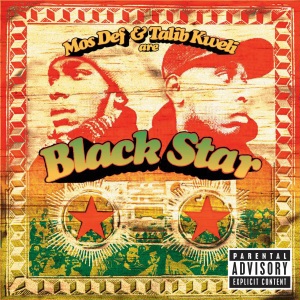
Mos Def and Talib Kweli are Black Star (10) album cover
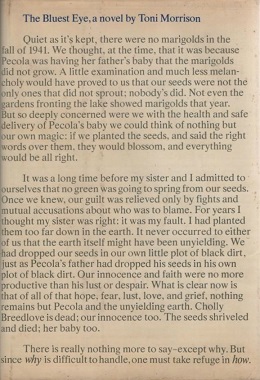
First edition of Toni Morrison's The Bluest Eye (1970)


In the true meaning of "revision," seeing something anew, Talib Kweli and Mos Def of the rap group Black Star, revise the words and the ideas of Toni Morrison's The Bluest Eye in their song "Thieves in the Night" from their self-titled debut album. The song takes its title and its chorus from the closing passage of the novel in which the child narrator, Claudia, reflects on how her classmate Pecola was ostracized unfairly by the black community (and the larger white community) for her alleged "ugliness." Kweli and Def affirm Morrison's argument that, as they put it in the song, "the law of the bluest eye" still governs black experience in America: Anglo-Saxon ideas of beauty, blue eyes, straight, blond hair---are considered the norm. But the rappers also update these "laws" and show how their "jurisdiction" has extended from the segregation-era ideas of racial beauty that the Nobel Prize laureate critiques in her first book. Kweli writes in the liner notes to "Black Star" of reading The Bluest Eye in a high school classroom and how the novel, as he writes, "struck me as one of the truest critiques of our society, and I read that in high school when I was 15 years old. I think it is especially true in the world of hip hop, because we get blinded by these illusions." Within the "hip-hop" context of postindustrial urban African American communities, "the law of the bluest eye" still applies, it guides the actions of the police state in its management of inner-city black bodies.

Kweli at Rawkus Records in NYC, 1999

Mos Def's second verse of "Thieves in the Night" perhaps provides the closest reading of the novel in the song. He begins, "Yo, I'm sure that everbody out listenin agree / That everything you see ain't really how it be." This idea that seeing is not being is critical to The Bluest Eye: Pecola's "ugliness" is never confirmed literally in the text; her lack of beauty is how she is seen by white society, not how she actually looks. Mos Def, though, sees something of the psychology of Pecola's "racial self-loathing," as Morrison calls it in her Afterword, the internalized racism from which Pecola and others in the novel suffer, in contemporary inner-city black male youth:
Most cats in my area be lovin the hysteria
Synthesized surface conceals the interior
America, land of opportunity, mirages and camoflauges
More than usually -- speakin loudly, sayin nothin
Morrison links Pecola's negative self-image to the broader images of normative American identity, family, and home through the juxtaposition of the Breedlove household with the idealized household of Dick and Jane from the primary readers. For Def too, there is a broader national narrative at stake, the very idea of the American dream is little more than a "synthesized surface" that "conceals" a far less hopeful reality. Mos Def seems to argue that it is the worship of materialism, integral to the American dream, that is particularly problematic in black communities when he raps "Gets yours first, them other niggas secondary / That type of illin that be fillin up the cemetery." For Def, the rampant consumerism, perhaps in the rap songs and videos of more mainstream artists, is a form of "mental slavery": "Put you on a yacht, but they don't call it a slaveship." The binary system of racial identification of the Jim Crow era still lingers in the late twentieth century when African American men must chose between being "niggas or Kings." Moreover, the establishment of one's "monarchy" seems contingent on exerting one's power over other blacks, just as Pecola is used as a scapegoat by the larger black community in their establishment of the dichotomy between "niggers" and "colored people" (87).

The American dream family according to the Dick and Jane primers

And fantasy it was, for we were not strong, only aggressive; we were not free, merely licensed; we were not compassionate, we were polite; not good but well behaved, and hid like thieves from life. We substituted good grammar for intellect, we switched habits to simulate maturity; rearranged lies and called it truth, seeing in the new pattern of an old ideas the Revelation and the Word. (206)
The title of Black Star's song seems to argue that blacks are still in some ways hiding their true identities, like "thieves in the night," as a result of the pressures to conform imposed by mainstream American society. By revising the final passage of The Bluest Eye in the chorus to the song, they repeat and develop Morrison's argument that the conformity of assimilation is a kind of social death, in her words, "hiding from life." The idea of being "not strong...only aggressive" bears a specifically interesting relation to the image of the "thug" in modern black life--inner-city gangsters, Def and Kweli seem to argue, are street tough but not truly "strong" in the sense of strength of character. In lyrics added to the final paraphrased passage from The Bluest Eye, Black Star reiterate that young black men may be "chasin' after death," but are not truly "brave." In a clear reference to the style of 1990s gangsta rap, Talib Kweli writes in his first verse to "Thieves in the Night":
Survival tactics means bustin gats to prove you hard
Your firearms are to short for God
Without faith, all of that is illusionary
Raise my son, no vindication of manhood necessary.
The underground rappers are searching for a form of black masculinity not defined by one's "hardness," but by more spiritual qualities like faith and family. Like Morrison does in The Bluest Eye, Black Star attempts to "find beauty in the hideous." Again, for Kweli and Mos Def, the "thug life" is part of the legacy of American chattel slavery with the prison-industrial complex serving as the postmodern plantation.
[M.D.] Not strong
[T.K.] Only aggressive
[M.D.] Not free
[T.K.] We only licensed
[M.D.] Not compassioniate, only polite
[T.K.] Now who the nicest?
[M.D.] Not good but well behaved
[T.K.] Chasin after death
So we can call ourselves brave?
[M.D.] Still livin like mental slaves
[Both] Hidin like thieves in the night from life
Illusions of oasis makin you look twice
[Both] Hidin like thieves in the night from life
Illusions of oasis makin you look twice